A good testimonial video does something your own marketing can't: it lets a real customer say, in their own words, why they chose you and what changed afterward. Buyers trust other buyers. But the difference between a testimonial that feels honest and one that feels stiff usually comes down to what happens before the camera turns on.
If you're planning a testimonial shoot for your business in Tampa Bay, Orlando or Polk County, here's how to prepare so the day runs smoothly and the final video actually helps you win work.
1. Start with the goal of the video
Before you pick who to film, decide what the video needs to do. A few common goals:
Overcome a specific objection, like price, timeline or "we tried this before and it didn't work"
Support a sales page or proposal for one service
Build general trust on your homepage or social channels
Show results for a particular industry you want more of
Your goal shapes everything else: who you film, what you ask and how long the finished video should be. A 60-second homepage piece and a 3-minute case study are planned differently.
2. Choose the right customers to feature
The best testimonial subjects aren't always your biggest clients. Look for people who:
Had a clear "before and after" experience with your business
Speak naturally and enthusiastically when they talk about you
Match the type of customer you want to attract more of
Are comfortable being on camera (or willing to try)
Reach out personally rather than with a form email. Explain what the video is for, how long the interview will take and where it will be used. Get their written permission to use the footage, and confirm whether they need approval from their own company first.
3. Prepare questions, not a script
Scripted testimonials almost always sound scripted. Instead, prepare open-ended questions that invite a story. A simple structure that works well:
The problem: What was going on before you worked with us? What was frustrating?
The search: What made you look for help, and why did you choose us?
The experience: What was it like working together? Was anything surprising?
The result: What's different now? What would you tell someone in your position?
Share the general topics with your customer ahead of time so they can think about it, but don't hand them answers to memorize. Your videographer can ask follow-up questions and coach them to answer in full sentences, so each clip makes sense on its own.
4. Pick a location that tells part of the story
Where you film matters. Shooting at the customer's business, in their shop, office or job site, shows the real setting your work happened in. Filming at your location can work too, especially if you want to show your team or process.
When you choose a spot, look for:
A quiet room. Air conditioners, ice machines, phones and nearby traffic all show up in the audio. In Florida, that A/C hum is a common culprit, so ask whether it can be turned off for a few minutes at a time.
Space and depth. A little distance between the person and the wall looks much better on camera.
Natural context. Products, equipment or signage in the background (not cluttered) helps the viewer understand who they're hearing from.
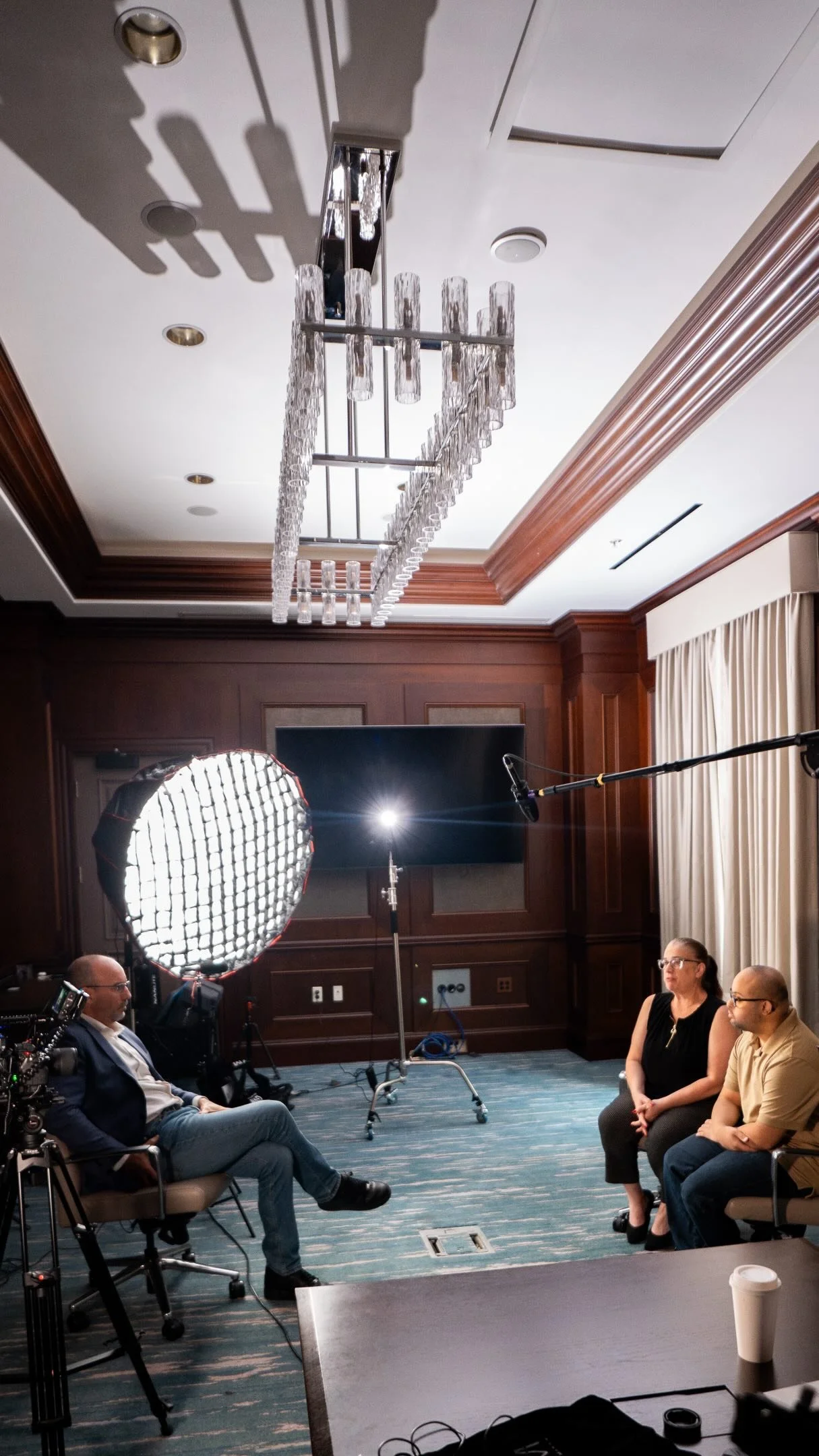
Time to set up. Plan for lighting and sound setup before the interview begins.
5. Plan for b-roll
B-roll is the supporting footage that plays while the customer is talking: shots of them at work, your team on the job, the product in use, the storefront or the finished result. It keeps the video moving and shows what the person is describing.
Make a short list of shots you'd like to capture and let the location know ahead of time. If you're filming at a client's business, confirm it's okay to film employees, customers or sensitive areas.
6. Help your subject look and feel their best
A few simple tips to pass along to the person on camera:
Wear solid colors and avoid small stripes, busy patterns and large logos (unless it's your brand)
Bring a change of top if they're unsure
Get water and take a breath before starting
Look at the interviewer, not the camera, so it feels like a conversation
Most people are nervous for the first few minutes and loosen up quickly. A relaxed, unhurried interview is worth the extra time.
7. Build a realistic schedule
A single testimonial interview with b-roll usually takes a couple of hours once you include setup, the conversation and supporting shots. If you're filming several customers in one day, give each person a time slot with a buffer in between. At ISO 24 Media, shoot bookings have a 2-hour minimum, which leaves room to do it right without rushing anyone.
8. Decide on deliverables up front
Know what you want before the shoot:
One main testimonial video, or several short ones?
Horizontal for your website and YouTube, vertical for Reels and Shorts, or both?
Captions for silent autoplay on social media?
Our testimonial videos are delivered in 7 to 10 business days with 2 free rounds of revisions. Short social clips cut from the interview are available as a paid add-on, which is a great way to get more mileage from one shoot.
9. Put the finished video to work
Once it's done, use it everywhere your buyers are making decisions: your homepage, service pages, proposals, email follow-ups, Google Business Profile and social media. One strong customer story can support your sales for years.
Ready to plan your testimonial video?
ISO 24 Media is a 5-star rated video production company based in Lakeland, Florida. We help businesses capture real customer stories that build trust. Learn more about our testimonial video production, or see how we approach brand videos and corporate event videography.
We film across Central Florida, including Tampa, Orlando and Lakeland and Polk County. Request a quote or call 813-644-9724 to get started.